
Navigating a Seamless OTT Platform Switch: Lessons from a Recent Success
 At Magine Pro, we understand that transitioning to a new OTT platform can be daunting, even though it’s pivotal for business growth. Recently, we had the privilege of assisting a valued client through this process in record time. From the start of the project to having the existing customer base live and using their new apps took less than four weeks! So how did we achieve this rapid migration and what did we learn along the way? In this blog, our Customer Success Manager, Esther Pino, shares the strategies and approaches that ensured a smooth transition without disruptions to their service.
Understanding the Migration Landscape
For any OTT service provider, the need to migrate often arises because their existing platform can’t meet their growth requirements. There can be many sticking points that finally trigger the search for a new provider – from scalability and monetisation flexibility to the quality of the user experience. In the current climate, however, the main driver is definitely the desire to reach Smart TVs.
Big screen was certainly the priority for our most recent new customer, an OTT service based in Latin America. They made the switch to Magine Pro’s OTT platform because they wanted to capture a share of the booming market for streaming content on Connected TVs. Their first goal was to have apps on the market-leading devices – Samsung and LG – but also to have the scope to reach other brands of TV in the near future.
The biggest challenge in this project was the timescales. For their own business reasons, the customer wanted to go live with their new apps on the Magine Pro platform in under four weeks. Anyone who’s launched or migrated an OTT platform will know that’s a tall order, but it’s totally achievable with the Magine Pro platform, as we demonstrated by going live in 3.5 weeks! Here’s how we did it:
Start Strong: The Step-by-Step Approach to OTT Upgrades
My colleague Marcus Lindén has already blogged about some of the top technical considerations for any OTT service looking to switch platforms and offered his low-stress guide to getting it done. For me, the key to success in any customer engagement is great communication. This starts with our onboarding process where we outline:
- All the tasks involved
- Roles and responsibilities for both Magine Pro and the customer
- Where the customer can find how-to documentation
We’ve spent a lot of time optimising our customer-facing documentation so that everyone is clear on their roles and responsibilities within the project. The onboarding process also includes a full demonstration of the Magine Pro Console – our online tool that is used by our customers to manage the configuration of their apps and curate their content. Thankfully, the Console is super-easy to use, but it also includes in-app FAQs and help sections so our customers can get self-service support.
The Step-by-Step approach to a successful OTT Upgrade
In any migration process, there are some tasks that take longer than others. These typically include ingestion of content and getting app store approval from the Smart TV manufacturers. So, we always highlight the importance of starting on these tasks as soon as possible.
In the case of our recent client, they had a huge library of movies to upload, so I advised them on prioritising their “must-have” content for launch. By working on that first, they were ready to make the switch as soon as possible, leaving the longer-tail movies to be ingested after launch if necessary.

Regular Engagement: A Recipe for Success
It is possible to successfully move an OTT service to the Magine Pro platform with just the onboarding meeting and the provision of our documentation. However, with such a tight timeline, we agreed on a schedule of very regular internal and customer meetings to check in and ensure everyone was continuously aligned on the project. These sessions served as crucial touchpoints where progress was reviewed, challenges addressed in real-time, and next steps defined collaboratively.
You might be thinking that the customer needs to have a big technical team in place to manage their side of the process, but that couldn’t be further from the truth. In fact, our recent customer has just three full-time staff: two working on content and one on marketing. They were very responsive and engaged with the project and between them were able to hit all the deadlines required to make the timeline a reality.
Managing The App Store Approvals Process
With the various app stores, it’s the customer who owns the relationship with the likes of Apple, Google etc. so we can help, but we can’t do the whole process for them. For the recent customer, this was the first time they’d worked with LG and Samsung, so it was important to get their accounts created early in the process. While we create and test the apps, it’s the customer who has to submit them and all supporting promotional materials.

For the Smart TV companies, there’s the additional burden of creating a PowerPoint presentation that outlines how the app functions to support them in their approvals testing. We’ve done this many times before, so in our very first meeting to onboard the customer, I’ll outline the whole process with them and walk them through the different images, text, and documentation that will need to be uploaded through each app store.
One aspect of launching on Smart TVs that is familiar to us, but came as a surprise to our latest customer as it has many other OTT services, is the issue of backwards compatibility on older screens. Although our apps work well on older models of Connected TV, the manufacturers typically require a separate contract before they’ll release an app to devices launched in 2019 or earlier. This is, like the app store submission process itself, something we can advise on, but a process the customer must manage themselves. It’s another thing they need to work on as soon as possible to avoid any delays.
Getting Subscribers on Board: Reducing Friction To Mitigate Churn
The final step before the customer goes live on the Magine OTT platform is to migrate their user data across from their old platform. We’ve optimised our migration scripts for speed and efficiency. In our most recent project, we were able to transfer all the user data (with the exception of passwords) in around two hours which minimised the downtime for subscribers before we could get them going on the new apps.
The timing of this process is essential, but so is the way it’s communicated. Any kind of confusion or unexpected friction runs the risk of causing subscribers to churn. With our recent project, the customer took our advice to be very proactive in communicating with their subscribers about the upcoming change.
In addition to emails advising users of what was to come, they displayed banners in the existing apps that linked to a landing page which described what the migration process would look like. This was key in getting consumers ready to create their new passwords and explore the new, upgraded user experience. We also provided SEO optimization links that were added to their existing web pages. These ensure users are redirected to the new apps when Googling specific content.
Post-Migration Support and Optimisation
Of course, the initial transition is not the end of the story. Now that this customer is live on the Magine Pro OTT platform, there is still much work to be done. There are more Smart TV apps to be added in the future and further content to be uploaded.
Our Customer Success team continues to support them in the post-migration phase, assisting them with verifying configurations, optimising platform settings, and addressing any post-launch adjustments. This holistic approach ensures that our clients not only go live on time but also thrive in their new digital environment.
Looking Ahead: Lessons Learned and Future Readiness
Reflecting on this specific project, it’s clear that effective communication, meticulous planning, and agile execution are paramount when you’re looking to achieve both speed and quality. While each migration presents unique challenges, we are committed to delivering a seamless transition. If you’re contemplating a migration or seeking to optimise your current OTT setup, contact our experts to talk about your needs.
Don’t Panic! A stress-free guide to upgrading your OTT service
 No video service makes the decision to switch OTT platform lightly, but moving to get Smart TV apps, better UX and better monetisation options doesn’t have to be a nightmare. In recent blog posts, we’ve looked at the streaming trends that are driving OTT services to consider moving technology platforms, as well as some of the key challenges they face when making a switch. In this post, our Head of Engineering and Operations, Marcus Linden, provides an insight into what a migration process looks like, and what the video service can do to make it go as smoothly and quickly as possible.
“We’re going to need a bigger boat!” When you’ve outgrown your OTT platform
You probably chose your current all-in-one platform so you could concentrate on content and outsource the many complexities of going OTT to a team of experts. Smart move! You didn’t need to hire your own specialists in UX design, app development, billing, integrations, transcoding etc. But a few years in, you’re starting to feel like you’ve outgrown your existing provider. You want Big Screen apps, flexible monetisation options and a higher-quality UX, but for that – to quote the movie Jaws – “going to need a bigger boat”!
We’ve helped a number of OTT services make the switch to the Magine Pro platform to get all these benefits, and we know that it can be a daunting decision. You’re not just swapping out a single app, billing solution or transcoding tool – you’re switching pretty much everything all at once. And you’re probably in a hurry to make it happen as soon as possible. The good news is that, unlike hunting for Jaws, migrating OTT platforms doesn’t have to be terrifying!
Here’s what we’ve learned from guiding other services through the switch, helping them to move over as quickly as possible, with minimal disruption to both end users and their internal operations.
Ready, Set, Go! What you need in place to make switching fast and fuss free
The work to get a customer switched over to the Magine Pro platform can take as little as two weeks, with daily check-ins between a representative of the customer’s organisation and our customer success team. But to achieve such an expedited timeline, the customer needs to be fully prepared to supply all the necessary information and ensure they have team members who are accountable for key areas of the migration.
How to get your content into your new OTT platform
In our experience, the task that takes up the most time when moving platforms is moving the content itself, including video, metadata and images. So, you’ll want to get started on this process as soon as possible.
When it comes to video, as I described in my previous blog post, you can either ingest the source files for all your existing content, or you can move over the existing DRM-encrypted files. Our advice is to go back to the high-quality source files. It may seem counterintuitive if you’ve already transcoded the content, but every platform has its preferred formats and this is a great opportunity to normalise all your content which may have been uploaded at different times and rendered into different bit-rates. While uploading source files to cloud storage does take time, it’s typically no more time-intensive than uploading all the different renditions of the same file. We advise our customers to use automation to smooth the batch-upload process, rather than requiring someone to supervise manual uploads. Having some scripting skills on hand to support this, even just for a few weeks, will likely increase the velocity of your move to your new platform.
Metadata is the new oil: Maximising discoverability in your new OTT platform
It is crucial that any video service takes the time to get the metadata transfer right when switching to a new OTT platform. In many cases, the existing system is the “source of truth” for all your content metadata, but it’s not always – perhaps you’ve got a separate rights management system that you’ll be exporting from. But wherever you hold your metadata, you’re going to need to ensure it maps accurately to the fields in your new platform. Again, you’ll want to automate this process and we’re often called upon to help our customers with the technicalities of this data transformation.
Trading Up Your OTT User Experience: Big Screen and Small Screen Apps
Although an end-to-end OTT platform relieves you of the responsibility for designing your own apps, there is still a need for some design input from the video service provider. Logos and other image assets need to be provided, including images for the App splash screens. In return, you’ll also need to upload images of the refreshed Apps to the various app stores to promote your service. So while you probably won’t need a designer on your staff to smooth the project along, we do recommend you have someone on the project team who is responsible for sourcing and signing-off the necessary designs and imagery.
Once the apps are ready, we’ll typically push them into the customer’s app store accounts (you’ll need to supply the credentials) but it’s up to the customer to do final testing and actually submit the apps for review and publication.
When it comes to TV apps for the likes of LG or Samsung, you probably already know that the review process is typically much more lengthy than with Google or Apple. If you’re switching platforms to get access to big screen apps for the first time, you can afford to make the jump for all your other apps and wait for the Smart TV app approvals to come through at a later date. If you have existing apps, the approvals process is something you’ll need to take into account when planning your switch-over date. But if you’re working with a partner like Magine Pro who has already published many apps for companies like LG and Samsung, it can be helpful to highlight to them that the apps you’re submitting for review are using exactly the same code-base as other apps they’ve already approved.
Getting to know you: Switching your customers to the new platform
While the high-volume migration of content is happening in the background, and your apps are being approved, another topic to focus on is customer data. The first step is to provide examples of the user details held in your current platform to the new service provider so they can start to match fields and identify any issues.
If, as outlined in my previous blog, you’re bringing over customer accounts but not passwords, a key step is to craft in advance the template emails that will go out to existing users to inform them that they need to create a new password when they log in for the first time after the switch-over. Getting these communications right is key to limiting user friction and the potential for churn during the migration process. At the same time, you’ll also need to configure template emails for all those business-as-usual customer flows such as reset password, payment processed, payment card expired, etc.
Automating the migration of customer data and user accounts between OTT platforms
When you’re ready to switch the users over, automation is once again going to be your friend. Ideally, you’ll have someone on your team with scripting skills and a working knowledge of your existing CRM/billing system. They’ll need to obtain the necessary customer data from your current platform so it can be safely added to your new platform via our migration team to:
- Create a user in the new platform with all relevant information – first name, last name, email address, birth date, location etc. The list will differ per platform.
- Create relevant entitlements for that user that map to their existing entitlements
- Add details of when their next billing cycle is required
On the day nerves: How to handle the actual switchover?
We typically recommend that customers time their switch-over to coincide with the regularly scheduled maintenance window of our cloud provider to ensure all back-ups are clean and in sync. We’ve already touched on the need to migrate the user accounts, but how do you stop any customer purchases or registrations falling through the net while that is going on? Our advice is to pause new sign-ups and purchases just before you take your image of the user database to avoid this problem.
Using automation will minimise the length of time when you’re unable to support customer interactions in this way, in our benchmarking tests, we expect it to take around two hours to migrate 10,000 user accounts, so it should be possible to do this process at a time of day when your service sees the least user traffic.
But in some cases, the existing OTT platform may not be able to disable sign-ups or purchases, so we’ll need to do a careful reconciliation of the delta between exported data and final data in the decommissioned system to avoid customer complaints.
Want to know more? Talk to our experts
As you can see, there’s a lot more to switching OTT platforms than meets the eye, but if you’ve got the right support and a team that’s done it many times before, you’re in safe hands. If you’d like to talk to the Magine Pro team about any of the topics raised in this blog, why not book a meeting.
Enhancing SaaS Retention: Dunning Strategies to Minimise Passive Churn
In the video streaming subscription business, retaining customers is as crucial as acquiring new ones. Passive churn, often caused by failed payment methods, can silently erode your customer base. Addressing this issue with effective dunning strategies can significantly enhance retention rates and boost your bottom line. This blog post explores passive churn optimisation, focusing on dunning retry strategies, the user journey, email communication, and key metrics.
Understanding Passive Churn
Passive churn occurs when customers unintentionally stop using a service, often due to payment failures. Unlike active churn, where users voluntarily cancel their subscriptions, passive churn is usually a result of mainly insufficient funds or expired credit cards. Addressing passive churn can save a substantial portion of revenue without the need for aggressive marketing or customer acquisition efforts.
Dunning Retry Strategies
Dunning refers to the process of retrying failed payments and communicating with customers to resolve payment issues. Effective dunning strategies can reduce passive churn by up to 30%. Here’s how to implement them:
- Retry Logic:
- Immediate Retry: Attempt to charge the card immediately after the first failure.
- Subsequent Retries: Schedule multiple retries over a period
- Communications:
- Pre-Dunning Emails: Notify users before their payment method expires.
- Post-Failure Emails: Send a series of emails after a payment fails, starting with a gentle reminder and escalating to more urgent language.
- Payment Success Notification: Confirm successful payments after retries.
The User Journey
Optimizing the user journey during the dunning process involves clear communication and a seamless experience:
- Transparent Communication: Clearly explain the issue and the steps needed to resolve it.
- Self-Service Options: Provide easy access to update payment information through a user-friendly portal.
- Support Access: Offer quick access to customer support for users who encounter difficulties.
Effective Email Content
Email communication is crucial in dunning processes. Here are tips for crafting effective emails:
- Personalisation: Address users by their names and mention specific subscription details.
- Clarity: Use simple and direct language to explain the issue.
- Call-to-Action: Include a prominent link or button to update payment information.
- Frequency: Start with gentle reminders and gradually increase the urgency.
- Segmentation: Tailor messages based on user behaviour and engagement.
Email Set-Up
To ensure your emails are delivered and not marked as spam:
- DKIM and SPF: Implement DomainKeys Identified Mail (DKIM) and Sender Policy Framework (SPF) to authenticate your emails.
- Monitor Bounce Rates: Regularly clean your email list to remove invalid addresses and reduce bounce rates.
- Track Open and Click Rates: Use analytics to measure the effectiveness of your emails and adjust strategies accordingly.
Statistics and Impact
Applying these dunning strategies can have a significant impact on your SaaS business. Here are some key statistics and metrics to consider:
- Reduction in Passive Churn: Companies can see a 10-30% reduction in passive churn by implementing effective dunning strategies.
- Recovery Rate: Track the percentage of accounts successfully recovered through dunning efforts.
- Retry Success Rate: Measure the success rate of payment retries to optimise retry schedules.
- Email Engagement: Monitor open and click-through rates of dunning emails to gauge their effectiveness.

Optimising passive churn through strategic dunning retry processes is essential for maintaining a healthy subscription service. By focusing on transparent communication, personalised email content, and effective email setup, businesses can significantly reduce passive churn and improve retention rates. Magine Pro provides a set of tools, that allow for configurable retry strategies, and fully customisable dunning emails to manage your brand and user call to action.
_____________________________________________________________________________________________
Interested in diving deeper into reducing churn? Download our latest white paper, ‘The Profit Playbook,’ for valuable insights into strategies that reduce churn and ensure long-term revenue maximisation. Additionally, explore ‘The Essentials of OTT Monetisation,’ our e-guide that delves into the intricacies of subscription, transactional, and advertising models.
If you’d like to discuss monetisation models further or explore the capabilities of Magine Pro’s advanced billing engine and dunning feature, connect with our experienced team. Visit our blog for more resources and explore our entire collection of white papers available for download. Stay updated with the latest news, events, partnerships, and product announcements by subscribing to the Magine Pro e-newsletter.
Four Strategic Insights from an OTT Veteran: What We Learned as a B2C Streamer
 Running an OTT video service is a constant battle to stay up to date with the latest tech and consumer trends, but some challenges are universal and have been with us since the earliest days of the internet. So when you’re choosing a technology platform, it can be comforting to know your service provider has been in your shoes.
A decade of streaming excellence, available off the shelf
It’s been more than 10 years since I co-founded Magine TV, a B2C linear streaming service at a time when the concept of delivering live video to consumers over the internet was still relatively unusual. We saw the potential for cord-cutting and multi-channel OTT aggregation platforms.

Although I’d been working in commercial and Pay TV since the 80s, the Magine TV project involved a massive learning curve around all the elements that go into developing a robust and attractive OTT service. We poured all our knowledge into developing what is now the Magine Pro OTT platform. Initially, we built it to serve our own subscribers, but now we make that same platform available to OTT services all over the world as an off-the-shelf solution.
Our unique track record in running D2C services means that it’s not just tech that you get when you work with Magine Pro, it’s our expertise. So, here are the four most important strategic insights I gained from our early days in streaming that I still believe are enormously valuable for today’s crop of new and growing consumer services:
- Know your audience and let that be your guiding star
- Start small, but get ready to scale-up fast
- Don’t try to do everything yourself
- Move with the times, and don’t be afraid to pivot
Want to know more? Here’s the detail:
Know your audience and let that be your guiding star
In the early days of planning our B2C streaming service, our goal was to appeal to the widest possible audience. We calculated this required access to 80% of the most-watched content in each market, necessitating partnerships with the free-to-air and public service broadcasters. This proved challenging and we eventually withdrew from certain markets where negotiations were particularly strenuous.
Today, we leverage this experience to advise niche streaming services on the importance of carefully defining their target audience. Unlike giants like Netflix and Disney+, niche services such as horror-themed VOD service Splatter and Romantic OTT service Passionflix, thrive by focusing intently on their specific viewer demographics, rather than trying to emulate everything done by their broad-based, mass-market rivals.
Start small, but get ready to scale-up fast
Take your development step-by-step. Looking back, we tried to do too many markets at once and spread ourselves a little thin. We were thriving in Germany and trying to launch in the UK and Spain. In parallel, we were doing great joint-venture business with TV operators as far afield as Thailand and China. My advice to anyone launching an OTT service today is always to evaluate every next step from a number of different angles – both when launching product features and apps, but also when looking to expand into different markets or genres.

One thing we learned a lot about in the early days was the importance of scale. In the summer of 2014, Germany won the FIFA World Cup in Brazil. Our football-mad German audience couldn’t get enough of the tournament and it was described by some as the first “cord-cutters cup”. Serving hundreds of thousands of concurrent streams with low latency, HD quality, live video, and no buffering was a massive technical challenge.
It’s the reason why the Magine Pro platform is still one of the most robust and scalable OTT platforms in the industry – because we know what it feels like to hear the opening whistle of the match and see the user numbers soar. You need to be confident that your tech will hold up under the strain.
Don’t try to do everything yourself
When we started work back in 2012 on what would become the consumer-facing Magine TV service, there weren’t any standardised software solutions handling live and catchup streaming. We built everything in-house, including the ability to use the mobile phone as a remote to cast to the big screen in the days before Chromecast. Today it’s very different. Companies like Magine Pro offer off-the-shelf solutions for reaching all consumer devices, including Smart TVs. Since SaaS OTT products are now widely available, if we’d had the choice back then, we’d have focused on the product market fit of the content, and worked with technology partners/platforms, rather than try to handle both.
Many OTT services are still tempted to build their own services because they think it will give them complete control over their UX and feature development. In the buy vs build debate, there are pros and cons on each side. In our experience, focusing on where you can really add value is the key to success, rather than trying to reinvent the wheel. Find a platform that’s configurable enough to give you the UX you want, without the hassle.
Move with the times, and don’t be afraid to pivot
In its day, Magine TV was undoubtedly a pioneer. I still remember the look of surprise on the faces of the journalists when we did our first pre-launch app demonstrations in a cable car over the Rhine. Showing live TV channels streaming to an iPad without a hint of a wired internet connection was at the forefront of viewing UX. A decade on, and no-one blinks at the idea of watching live streams on their phone from almost anywhere in the world.
Magine Pro has continued to move with the times, adding support for new and emerging devices, including the Big Screen Smart TVs which now account for over half of all streamed viewing for adults. We’ve helped customers to move with the economic times by adjusting to hybrid business models and take steps to tackle churn, lean-in to personalisation for improved engagement, and curate their content for improved content discovery.
It’s important to be ready to pivot when the market requires it. We walked away from those plans to launch in the Spanish and UK markets because it wasn’t financially viable. Then our ultimate pivot came when we realised our platform could be used by many different services rather than just our own. So in 2018 we sold our B2C business and adopted a fully B2B strategy, focusing on expanding our OTT platform to be the best end-to-end solution in the market.
Today we have a varied customer base of streaming services that rely on our design, UX, app development, content management and monetisation expertise to maximise their reach and delight their consumers.
Want to know more?
If you’d like to see for yourself how the Magine Pro OTT platform has evolved to offer a fully featured solution for niche streaming services to reach consumers on every device, why not book a meeting with our expert team?
Why OTT services are switching technology platforms: The key trends driving change
 If you’ve been operating your OTT service for a while now, but you’re struggling to take it to the next level, you’re not alone! Magine Pro’s CEO Matthew Wilkinson looks at the market demands that are driving OTT services to migrate away from starter-platforms in search of the features and functionality that will help them tackle churn, grow ARPU, and build customer satisfaction.
Making Headway in a Maturing Streaming Market
The streaming market is maturing. Hundreds of OTT services have launched in the past few years, from gigantic launches like Disney+ to smaller services that thrive by identifying a content niche and super-serving its fans. But many of these smaller niche services got their start in OTT on low-cost technology platforms like Vimeo or Viewlift. Now they’re finding the limitations of those platforms are acting as a brake on their growth.
Naturally, switching technology platforms comes with some discomfort. Most services will hold-off as long as they can. So what makes them finally take the plunge? From the many conversations we have with OTT services every month, here are some of the key reasons they’re looking to move to a more fully-featured OTT platform. Perhaps you can identify with some (or all) of these challenges?
Being Part of The Big Screen Battle
-
- The number one complaint we hear from OTT services is that their current technology platform doesn’t allow them to reach popular Smart TV brands like LG,Samsung and Vizio. At a time when viewership on these devices is exploding, content providers can’t afford to miss the boat. Research suggests Smart TVs now account for half of all adult streaming viewing.
-
- But even where platforms can provide a tick in the box for LG and Samsung, we hear from OTT services who are disappointed to discover app support only goes back a few years or lacks the feature depth coverage or quality. With the average Smart TV having an in-home shelf-life of closer to 7-10 years, it’s important to find a platform that offers apps for older models of device.
If you’re not sure whether it’s worth making the switch to a new OTT platform to get access to Big Screen apps, we highly recommend checking out the pros and cons in our whitepaper: Go Big or Stay Small?
Maximising Revenue With Hybrid Business Models
-
-
Smaller SVOD services are looking to capitalise on the blended monetisation approaches adopted by their bigger rivals. They’d like to provide a multi-package offering, with cheaper subscriptions for viewers who are willing to watch some level of advertising, and a premium package for those who want (and can afford) to go ad-free. Or to segment their packages for different video content catalogues to offer, for example, a sports subscription, or documentary subscription as unbundled offers alongside a “total” subscription that covers both.
- Many OTT services that launched with pure SVOD now find it difficult to pivot because their technology platform doesn’t offer AVOD or doesn’t have support for ad-insertion based on the SCTE-35 markers that are used in broadcast television.
-
-
-
As with big screen support, with AVOD the devil is in the detail. Platforms that promise AVOD support often struggle to offer billing adaptability. They force content providers to choose one business model per asset, rather than supporting a choice of ways to watch the same movie or TV show.
-
At the business end, platforms often struggle with handling revenue assurance and churn prevention (active & passive churn). Often platform providers will only deliver simple dunning mechanisms, if any, rather than look at toolsets to actively manage passive and active churn.
-
You’ll find lots of OTT case studies and advice on picking the right monetisation models in our Whitepaper, The Profit Playbook.
User Experience Challenges That Damage Engagement and Loyalty
As the streaming market matures, so do the tastes of viewers. We’ve all become used to the high-quality UX of the industry’s big players and expect the same wherever we watch.
We hear constantly from OTT services that are looking to switch to a new technology platform to gain support for premium features that improve UX and have a proven impact on engagement, features like:
- AI/ML-powered personalisation of content
- Automatic trailer previews & clear user calls to action
- Full multi-language localisation of apps, metadata, and content (including support for multi-track audio and multi-language subtitles)
These features are essential to ARPU growth and churn reduction. The image below shows even more UX elements you should look out for when shopping for a new OTT platform:

Perhaps you’re also coming to realise the limitations imposed by your platform in terms of app configurability? Do your apps look just the same as all the others? Do they really speak to your brand? To really stand out and grow in the market you need the ability to choose from more than a handful of fonts, menus and languages for localising your apps. Find out more about how to build apps that are truly tailored to your brand identity here.

Solving The Headaches of Niche Streaming Services
Do these challenges sound familiar? At Magine Pro, we’ve been where you are. Having operated a B2C streaming service before offering our OTT platform as a SaaS solution to other OTT services, we know that moving platforms is a daunting prospect. But the challenges outlined above show that it’s worth making the move to a new platform that offers big-screen apps, business model flexibility, and an attractive user experience.
The trick is to find a vendor that understands your challenges and offers all the features you need for now and the future, so you don’t need to contemplate another switch in two or four years’ time. Our team has significant experience in supporting other OTT services to migrate. You’ll find more information in this recent blog post, where our Head of Engineering and Operations, Marcus Lindén, outlines the key challenges involved and walks through some of the decisions you’ll need to make to smooth your migration journey.
Ready to Overcome Your OTT Platform Limitations?
To discuss with our experts how the Magine Pro OTT platform can help you overcome some of the limitations of your existing technology provider, book a meeting with our team.
The Top Five Challenges When Migrating OTT Platforms: What You Need to Know
As the OTT market matures, we’re hearing from more and more video streaming services who are looking to switch technology platforms. In some cases, they want more features than their current provider can offer: capabilities like personalization, big screen apps, support for hybrid revenue streams, and improved platform autoscaling to deal with peaks of user demand. In other cases, they’re looking for the efficiency and savings in terms of costs and development time that come with moving to an end-to-end OTT platform from a home-grown solution or a combination of multiple vendors.
Whatever your reason for considering a migration away from an existing OTT platform, it’s not a decision any service takes lightly. Like moving home, fear of the complications and challenges involved in a migration can lead streaming services to put off making a change until their current home becomes absolutely intolerable. But while moving providers can be challenging, it doesn’t have to be stressful. It’s a process we’ve guided a number of our customers through. In this blog, I’ll highlight some of the key considerations that you should take into account before embarking on a migration.
1. Migrating your video content to a new OTT platform
You’ve invested time and money in building a content library and optimising it to engage your audience. You’ll need to efficiently move video assets, associated images and metadata into your new OTT platform. Don’t forget this includes rights and availability information for each asset and any editorially-generated data such as thematic collections.
If you still have the source video files, you can ingest these directly into your new platform for re-transcode and wrapping with fresh DRM. There may be costs involved, but it can be worth it to get the correct video renditions for all the consumer devices you’ll now be targeting. For example, it’s much better to go back to the high-resolution source and create better-quality assets for new big-screen apps.
If you can’t access the original source content, or you’ve already created multi-bitrate files in all the sizes you need, it’s possible for your new platform provider to exchange encryption keys with your existing platform and re-use your current files. However, this requires timely cooperation from your outgoing vendor, which cannot always be guaranteed.
As well as migrating content, you’ll want to think about when to stop ingesting new assets into the old platform. It’s common to run both systems in parallel for a short time to ensure a smooth transition, but this is likely to create extra work for your editorial team, so it’s important to minimise the dual-running period where possible.
2. Transitioning subscription plans from an existing OTT platform
In addition to the content itself, you’ll need to go through a mapping process to make sure the subscription plans your customers enjoy today are still available when you’ve moved to your new technology platform. Keep naming and content selection exactly the same to avoid confusing customers during the transition and damaging your brand reputation.
If one of the reasons you’re migrating is to take advantage of new business models such as AVOD or TVOD alongside your subscription packages, it’s important to think carefully about how these will co-exist. You will also want to plan how you will communicate the migration and the new offerings to existing customers.
If you’d like to know more about implementing hybrid business models in your OTT service, I’d recommend you read our new e-guide: The Essentials of OTT Monetization our our advanced white paper, The Profit Playbook: Proven OTT Revenue Growth Tactics.

3. Moving users to a new OTT platform without creating friction and driving churn
One of the areas that most concerns OTT services is the friction that will be created for users in any platform switch. It’s sensible to consider the potential for churn and that’s why we suggest doing everything to avoid making customers re-register. One option is to migrate all their data, including passwords. This is the most seamless approach for users but there are security implications. Another option is to migrate all the other data, but ask them to create a new password at their first login via the new platform.
As well as granting access, user accounts must also be transitioned with all the relevant entitlements under their existing subscriptions. Making sure they’re mapped accurately is essential to avoiding customer complaints. Depending on the vendor of the OTT platform, the entitlements may be more or less tightly coupled to the individual video assets. This is something to consider carefully in parallel to the content migration questions we looked at earlier in this blog.
4. Preventing payment method errors in an OTT platform migration
The natural extension of concerns about migrating user accounts is the worry about friction around payment methods. It’s a particular problem for SVOD services that rely on stored card details to process monthly or annual subscription transactions. The more seamless the migration for the user, the less likely it is that consumers will simply not bother to take the steps required to maintain their subscription.
The process of migrating stored credit/debit card details will be easier if you’re using the same payment provider despite moving to a different streaming platform. But it can also be managed smoothly between different payment providers with sufficient notice and cooperation. Again, it’s worth looking at the advanced strategies outlined in our white paper, The Profit Playbook, especially the section on subscription dunning and win-back campaigns.
5. Seamlessly switching users to new versions of your streaming apps
While many OTT services switch platforms to unlock access via a wider range of consumer devices, including Smart TVs, it’s also important to consider how you migrate users from existing apps.
With Android apps hosted in Google Play or iOS apps via or Apple’s App Store, it’s a relatively simple process. Once the app versions from the new provider are ready to be published, they can be uploaded to the store with the same app ID as your existing apps, so the users get the new app whenever they next do a manual or auto app update. This generally requires minimal interaction with Apple or Google and little to no delay.
If you’ve got existing big screen apps, however, you’ll face a longer approval process. So, it’s important to start the dialogue with TV manufacturers like Samsung and LG as early as possible so you can work closely with them on managing the approvals and publication process. Working with an established big screen app developer is a good way to reduce the time involved in this transition.
For more on the process of developing, publishing, and maintaining big screen apps, download our whitepaper, Go Big Or Stay Small.

The path to progress – milestones for migrating your OTT service
So now we know the key challenges involved in migrating your OTT service. In an upcoming blog, we’ll look at how Magine Pro manages the milestones in a typical customer migration project to ensure the smoothest possible experience for viewers and content managers alike. Follow us on LinkedIn to be updated when the blog is published.
Want to know more?
If you’d like to talk to Magine Pro’s experts about migrating your OTT service away from your current vendor, why not book a meeting.
Takeaways from CES 2024 for video service providers
The annual Consumer Electronics Show (CES 2024) always grabs global headlines with eye-catching new gadgets and ever-expanding TV screen sizes. This year was no different, with acres of coverage for LG and Samsung’s new transparent TV screens, the latest virtual reality concepts, and robots that will make you anything from a cocktail to a stir-fry.
But, like the bright lights and razzmatazz of the host city, Las Vegas, the show-floor glitz of CES 2024 is largely a temporary distraction for the video entertainment industry. Behind the scenes, there are serious conversations about the future of streaming. So what were video service providers really talking about at CES 2024?

Magine Pro’s Sales Director, Neil Fender, at CES 2024.
Interest in AI is becoming more targeted
Just as we saw at IBC and NAB in 2023, Artificial Intelligence (AI) continued to be a major buzzword. Our CEO, Matthew Wilkinson, touched on this important topic in his recent blog on Large Language Models and Generative AI. But the partners and customers (both current and future) that I spoke to in Las Vegas are increasingly focused on the practicalities of deploying this constantly evolving technology. They’ve gone beyond wondering how AI might revolutionise the industry in the future, to looking at very specific use cases that will advance their short-term goals, not just their longer-term planning.
With consumers around the world becoming increasingly cost-conscious, churn is a massive area of focus for every streaming service, no matter what combination of business models they’re using. The video services I spoke to are looking for a strong and immediate return on investment for any foray into AI. In particular, they want it to keep consumers engaged so they’re less likely to look elsewhere for content. The benefits of offering personalized content recommendations are the most often-cited strategy for growing engagement, so it was a pleasure to be able to talk about the AI-powered recommendation capabilities in Magine Pro’s end-to-end OTT streaming platform .
I was also happy to talk through some of the tactics that have paid dividends for our existing customers when tackling churn. For example, the “dunning” functionality in our advanced billing engine enables them to systematically communicate with consumers whose payment methods have expired or failed. This proactive strategy prevents passive involuntary churn, minimising customer loss and ensuring a positive user experience. Another proactive approach is to automate “win-back” strategies. This means offering targeted discounts to certain users who have recently churned, or shown signs of being a flight-risk, to help keep them on-board.
We’ll have more about these tactics in our upcoming e-guide on advanced OTT monetization strategies. Register now to be among the first to get the guide, which will also explain some of the reasons we champion hybrid monetization models.
No moving out of the FAST-lane
I don’t think anyone was surprised to find that FAST – another of the biggest streaming trends of 2023 – was still a hot topic at CES. The low barriers to entry mean that FAST channels continue to be the most popular route into the streaming market for content owners, particularly in the US market.
The FAST trend I heard most about at CES, however, was those who’ve dipped a toe into streaming with FAST channels via aggregation platforms like Roku, Amazon, LG, and Samsung and now want their own suite of streaming apps to build a direct relationship with consumers. We had some excellent conversations at CES with technology partners and customers about how we can help them make that ambition a reality with the Magine Pro OTT platform because it’s quick and easy to launch, but also customizable so it can grow with their business.


Want to know more?
If you weren’t able to make it to CES 2024, you can book a meeting with our team to talk about how AI recommendations could improve your engagement, or how Magine Pro can elevate your content distribution and monetization strategies.
The Rise of LLMs and AGI in a Dynamic Tech Landscape
In recent years, technology hype cycles, notably Blockchains/Crypto and the Metaverse, have captured attention, spurred by a macro environment amplifying their visibility. A persistent question remains: What real-world problems do they solve, and what is their potential market reach? Despite ongoing relevance, significant behavioural barriers hinder mass adoption, such as trust issues in Crypto and social concerns in the Metaverse.
In this landscape, Large Language Models (LLMs) and the potential progress towards Artificial General Intelligence (AGI), particularly ChatGPT, have quietly emerged. They have swiftly gained user attention and recognition for their tangible value. Today, AGI is transitioning from novelty to utility, presenting two key perspectives:
Acceleration: Large Language Models (LLMs), akin to computing and the internet, serve as a transformative utility, laying the foundation for generalised applications. This empowers teams to not only access knowledge faster but also generate new solutions from existing information. The World Wide Web gave users access to the world’s knowledge, but LLMs take this a step further, by acting as the “intelligent” gateway to the knowledge and importantly being able to create new solutions from existing knowledge.
Generation: LLMs facilitate the generation of diverse content, including text, images, and gradually video, and this will inevitably disrupt workflows and the creative processes, prompting a pendulum swing between control (regulation, intellectual property safeguards) and creativity. Content generation will open the floodgates to even more User-Generated Content (UGC), by lowering the barrier to entry, but it should also augment, not replace, the creative process.
Despite its remarkable potential, we are still in the early stages of this new utility, much like when Tim Berners-Lee published his paper on the WWW. Similar to the WWW’s foundation, it will create an evolving ecosystem of services and platforms built upon LLMs. Challenges lie ahead, but opportunities will emerge. Learning and leveraging this new utility will be crucial in navigating the dynamic tech landscape impacting the future of work, businesses, and our day-to-day services.
______________________________________________________________________________________
Interested in LLMs and AGI? Reach out to the tech-savvy Magine Pro team for more insights. You can also explore our blog for more CEO insights with Matthew Wilkinson.
Learn about our flexible OTT platform and download our free white papers and ebooks on our website.
Enhancing Decision Experience (DX): A Path to Resolving Video Consumption’s Paradox
In the ever-changing media landscape, the multitude of streaming options presents a complex challenge: the more choices we have, the harder it is to decide. The ‘Paradox of Choice’ highlights our desire for autonomy and variety, but clashes with the overwhelming abundance of options. As streaming platforms expand, we spend excessive time choosing content, often overshadowing the enjoyment itself. Studies show that Netflix members lose interest after 60 to 90 seconds of browsing (source: “The Netflix Recommender System: Algorithms, Business Value, and Innovation” 13.2).
The Paradox of Choice and Human Behaviour:
The ‘Paradox of Choice’, while choice signifies freedom, an abundance of options often triggers cognitive overload and decision fatigue. This phenomenon is particularly evident in streaming services, where consumers often enter without a specific viewing preference. In this context, the complexity of decision-making is compounded when multiple people are involved, such as when sharing a TV. In streaming, each choice demands a significant investment of time, often 1-2 hours (as in a movie scenario), prompting meticulous evaluation. A simple decision can quickly morph into a laborious task, ultimately detracting from the anticipated enjoyment and potentially prompting consumers to switch services. The paradox highlights the intricate interplay between the allure of choice and the complexities it introduces in the content-rich landscape of the digital era.
Streaming’s Paradox: The Holy Grail of Recommendation & The Endless Scroll:
Streaming platforms, once celebrated for their convenience, now confront the very paradox they aimed to alleviate. By harnessing AI and machine learning, these platforms can extract nuanced insights into user preferences, behaviours, and interests. Despite the sophistication of these AI algorithms, which provide personalised recommendations, users often find themselves endlessly scrolling. While AI-driven recommendations undoubtedly enhance the experience and offer a superior selection, the user is still left with an abundance of choices. In essence, they must make a decision from an overwhelming array of good options, underscoring the challenge’s complexity. The solution lies not solely in refining recommendation engines, but also in focusing on the Decision Experience (DX) through UX/UI design choices. This strategy embraces the idea that less can be more, offering a manageable selection that amplifies user satisfaction, particularly within the realm of UX/UI design.
Simplifying the Choice-Making Process:
While personalised curation streamlines selection, optimising choices among high-quality options necessitates a dual focus on UX (User Experience) and UI (User Interface) design with an underpinning principle of DX (Decision Experience). The digital environment significantly shapes how choices are perceived and navigated. Streamlined categorization, thoughtfully designed layouts, and interactive features empower users, expediting the Time to Decision (TTD).
Design patterns rooted in ‘nudge theory’ (more here) can further guide users toward decisions. UX/UI strategies, such as spotlighting a single option on a focused screen or employing persuasive copy like “you should watch…,” or “pick up where you left off,” can encourage choices through subtle nudges. These nudges can leverage social conformity or cohesion, like displaying ‘Top 10 Movies in Your Country,’ and are even more effective when endorsed by a trusted individual (‘recommended by your friend’).
Drawing insights from various digital platforms, like Airbnb’s user-friendly interface for search and booking. Intuitive filters, clear visuals, and a streamlined booking process heighten the DX and accelerate the TTD. Users can quickly narrow down accommodation options and make confident selections, as the platform exemplifies effective choice-nudging design.
Employing design patterns that prompt decisions, such as “you should watch this title,” or limit choices, like “Watch this Film,” can further enhance the DX. This approach demonstrates how strategic UX/UI interventions can transform the decision-making experience, guiding users toward satisfying choices.
Contents Role in Mitigating the Paradox:
Content itself can act as a remedy for the content choice paradox. Serial content, like TV series, notably reduces decision-making complexity. Once viewers become engrossed in a series, consistent returns mitigate the need for repeated choices. Conversely, standalone movies require fresh decisions, contributing to cognitive overload. Content continuity streamlines Time to Decision (TTD) and amplifies user engagement.
When exploring user-generated content, especially short-form content, the minimal time investment reduces overthinking and decision-making hesitancy. Platforms like TikTok, employing a constrained UX in their ‘reels’ feature, presenting one video at a time and enhancing data feedback loops. Similar patterns can be observed on Netflix, where videos are autoplaying in full, rather than trailers, prompting choices after the video has started. These design approaches effectively curtail choice-related burdens and contribute to more streamlined decision-making processes.
Learning from TikTok’s Success: A Lesson in UI/UX Design:
TikTok’s minimalist design offers a compelling solution to the content choice paradox through its effective UI/UX. By offering users a continuous stream of personalised short videos, TikTok relieves the burden of decision-making (more can be read on this here). Its design fosters immersion without overwhelming choices. This emphasises the importance of an intuitive UI/UX in simplifying choice complexity and enhancing content enjoyment. TikTok’s approach highlights the significant impact of a well-crafted interface on the Time to Decision (TTD) and overall user satisfaction. Notably, the TikTok UX/UI experience minimises the time between starting content and scrolling past it, thanks to thoughtful design and singular device usage (typically one user scrolling on one device).
Netflix has taken a similar approach to enhance decision-making on mobile devices with its “Fast Laugh” feature. This short-form preview provides a genre-specific snippet of content, specifically designed for quick consumption, setting it apart from conventional movie trailers. This adaptation illustrates how platforms can leverage efficient decision-making principles inspired by TikTok’s model (more here).
Yet, as the landscape shifts toward traditional video streaming, especially with larger screens in focus, exploring shared social decision-making becomes relevant. Platforms must innovate ways to enhance collective decision-making, moving beyond reliance on individual remote control usage. Envisioning shared, social big-screen viewing prompts reimagining the user experience to facilitate collective decision-making, thereby enriching the content discovery journey in a more engaging and inclusive manner.
To Conclude:
In navigating the content choice paradox of streaming, three key concepts emerge:
- Curation and Personalisation: Prioritising tailored content through curation and personalisation reduces choice overload, guiding users to satisfying selections and streamlining Time to Decision (TTD).
- User Experience (UX) and User Interface (UI) & Decision Experience (DX) Design: patterns, inspired by ‘nudge theory,’ simplify decision complexity, empowering users to make confident choices and minimising decision fatigue.
- Content Continuity and Short-Form Engagement: Embracing content continuity, particularly with serial TV series, and leveraging user-generated short-form content curbs cognitive burden, enhancing overall decision-making.
By harmonising these approaches, streaming platforms can reshape the discovery journey, converting choice into a conduit for enriched entertainment experiences, where ease, engagement, and enjoyment converge.
________________________________________________________________________________________
Keen to discuss how OTT can enhance the decision experience for audiences further? Book a meeting or get in touch with the Magine Pro team. We also have some useful insights and resources available on our blog and free to download white papers, ebooks and more.
Quality Assurance at Magine Pro – How we ensure the best streaming experience

My name is Ksenia, I’m a Quality Assurance Engineer within one of our backend teams and in this blog post, I will share insights about the Quality Assurance (QA) process here at Magine Pro.
The QA process is a critical component of any successful software project. QA is important in a product like a streaming platform for several reasons, both from the user and business perspectives.
From the user perspective, a high-quality streaming platform can significantly enhance the user experience, which is critical to user satisfaction. With a robust QA process, the platform can ensure streaming quality is consistent and reliable. And users are more likely to return to a platform.
From the business perspective, QA is crucial because a reliable and high-quality platform can attract more users, which can increase the platform’s revenue through subscriptions. Moreover, a platform with a poor QA process can result in negative reviews and feedback from users, which can harm the platform’s reputation and lead to lost revenue.
The QA process is responsible for ensuring the software meets the required quality standards and performs as expected. It involves a series of testing and analysis techniques that are designed to identify and resolve issues or bugs in the software.
We will explore the various stages of the QA process, including planning, design, and execution, and how they contribute to the overall success of a project. So, let’s dive in and explore the world of QA!
Our QA process consists of several steps:
- Requirements Analysis
- Test Planning
- Test Design
- Environment Setup
- Test Execution
- Test Closure
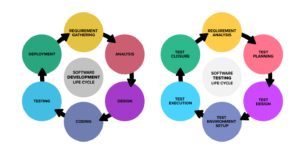
- Requirements Analysis
Our team has a refinement meeting where the product manager introduces a new feature to us and we ask questions about the functionality, purpose of the feature and clarify the requirements. As a QA engineer, I prepare high-level test cases which will make sure everything works as expected in the next steps of the development process. We use Jira here for keeping our requirements and Google Spreadsheets to track the traceability between requirements and tests.
- Test Planning
When the high-level test cases are ready I sort them by priority. Also in this step, it is essential to understand if we have dependencies with other functionality and if so include them in the planned checks.
- Test Design
Based on the requirements and high-level test cases, I go on to create detailed test cases and figure out what test data we need to run the different tests. And think over the test data we need for tests. Then I create automation tests for the most critical cases. To automate tests, we use the Assertible no-code tool in tandem with the Ngrok service, which provides Assertible with a secure and safe connection to our internal services. For our manual test cases and checklists, we use Google Spreadsheets.
- Test Environment Setup
I ensure the component versions are in the test environment and prepare test data for test cases.
- Test Execution
As I mentioned, I’m from the backend team, so I do testing mostly on the backend side where the logic is stored. I execute manual and automated test cases that were created on the Test Design step in our integration environment and check the feature works according to requirements, API calls correspond to the expectations, and ensure there is nothing suspicious in the logs.Also at this stage, we check the implemented functionality has not introduced new bugs, and run a suite of regression tests in Assertible. A regression test suite is a set of tests that cover existing functionality and are continually updated and extended. After a new feature is implemented, the tests developed for it go into the regression suite.I also run some tests on the front-end side to make sure it integrates well with the backend. I report the issues which were found during testing and once the defects are fixed, I retest functionality to ensure that the defects have been resolved and haven’t introduced new bugs. We have a lot of monitors and dashboards and a good logging system where we can see the system state in real-time and it is actively used during testing to check the status of the services.One of the important steps here is acceptance testing. This is the final test execution step which includes two activities in our process.
A. Mob testing: This is an activity in which we get together with QAs from other teams and our Product Manager and check new features against requirements. As soon as this step is done we can deliver the feature to production.
B. Acceptance test: Our partners can also make an acceptance test and ensure that the product meets the expectations.
- Test Closure.
I ensure once more that critical bugs found are fixed, set the regression schedule and post the report about the test results and links to test documentation and new automated tests in the Jira ticket.
All of our features go through these steps and we think about quality from users’ and partners’ perspectives. For example, during hack days for the Recommendation system, we checked all used internal components were integrated well without any issues with existing functionality. We checked if the customer could configure the recommendation collection and made sure that this collection is available for the user and shows unique content to each user based on their data.
This is our current process which constantly changes and adapts for business purposes. A well-designed QA process can help ensure that products meet the desired level of quality, and functionality, while also minimizing the risk of defects and errors.
_______________________________________________________________________________
Find out more about Magine Pro’s extensive library of technical resources and experienced team that enable our partners to deliver seamless streaming experiences on all devices here. You can also head over to our experience page to learn more about our partners.
Don’t forget to subscribe to the Magine Pro e-newsletter to stay up-to-date with our latest news, partners, products, and to find out which industry events we’ll be attending next.